
Essential Ai and Ml Guids
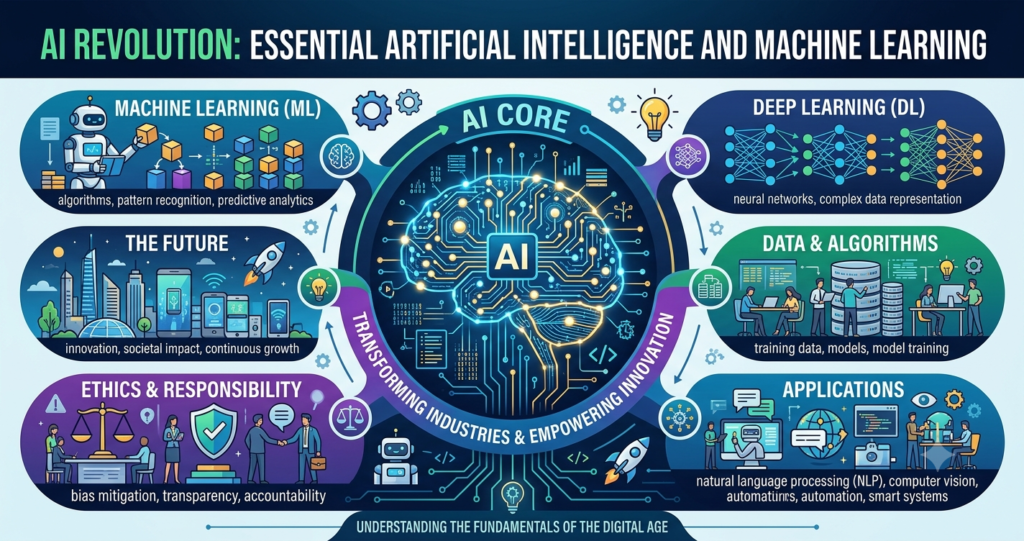
The world is experiencing a technological transformation unlike any before. Businesses, governments, and individuals are increasingly relying on digital innovations to improve productivity, enhance decision-making, and create new opportunities. At the center of this transformation lies Essential Artificial Intelligence and Machine Learning, two powerful technologies reshaping industries across the globe.
From healthcare and finance to education and marketing, Essential Artificial Intelligence and Machine Learning solutions are helping organizations automate processes, analyze vast amounts of data, and deliver personalized experiences. As AI adoption accelerates, understanding these technologies is no longer optional it is becoming a necessity for professionals, business leaders, and technology enthusiasts alike.
This guide explores the foundations, applications, benefits, challenges, and future trends of Essential Artificial Intelligence and Machine Learning, providing a clear roadmap for navigating the AI revolution.
Table of Contents
Do Checkout: https://pytorch.org
1. Understanding Artificial Intelligence
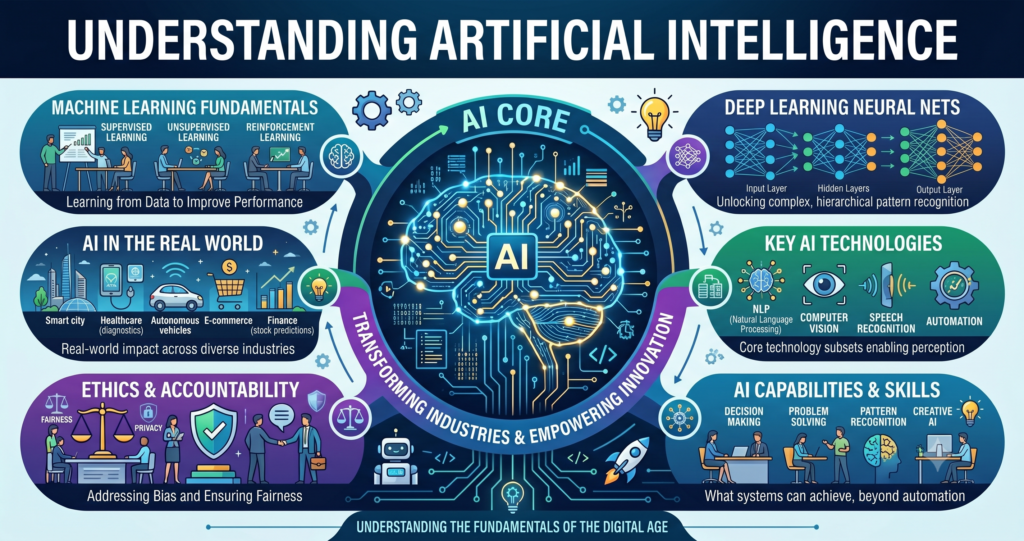
Artificial Intelligence (AI) refers to the ability of machines and computer systems to simulate human intelligence. AI systems can perform tasks such as reasoning, learning, problem-solving, language understanding, and decision-making.
The goal of Essential Artificial Intelligence and Machine Learning is to create systems that can analyze information and make intelligent decisions with minimal human intervention. AI technologies power virtual assistants, recommendation systems, chatbots, and autonomous vehicles.
As organizations continue investing in AI, understanding its core principles becomes critical for staying competitive in today’s digital economy.
2. What Is Machine Learning?
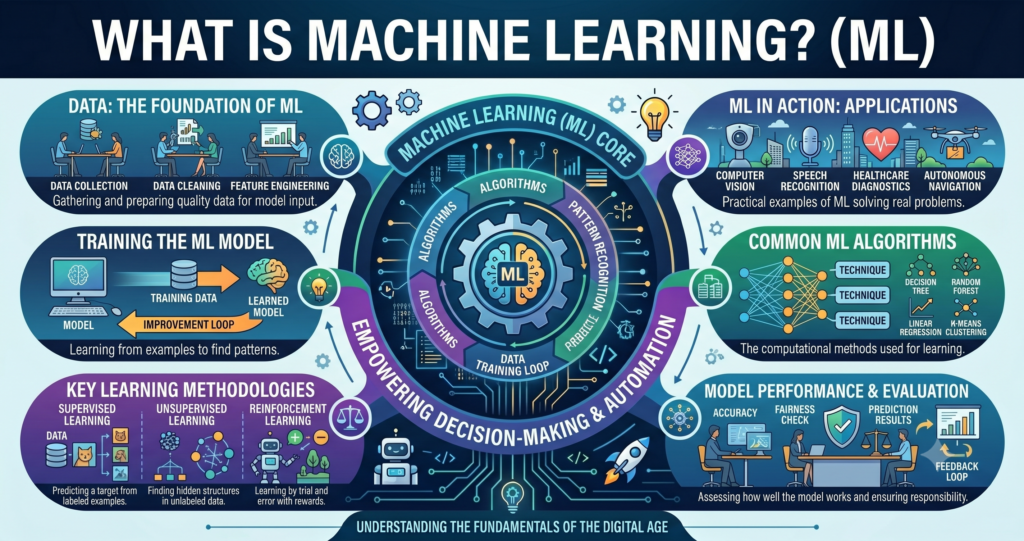
Machine Learning (ML) is a subset of AI that enables systems to learn from data without being explicitly programmed. Instead of following fixed rules, machine learning algorithms identify patterns and improve their performance over time.
Essential Artificial Intelligence and Machine Learning rely heavily on data-driven learning. Common machine learning approaches include:
- Supervised Learning
- Unsupervised Learning
- Reinforcement Learning
These methods help businesses predict outcomes, detect anomalies, and automate complex decision-making processes.
3. The Relationship Between AI and Machine Learning
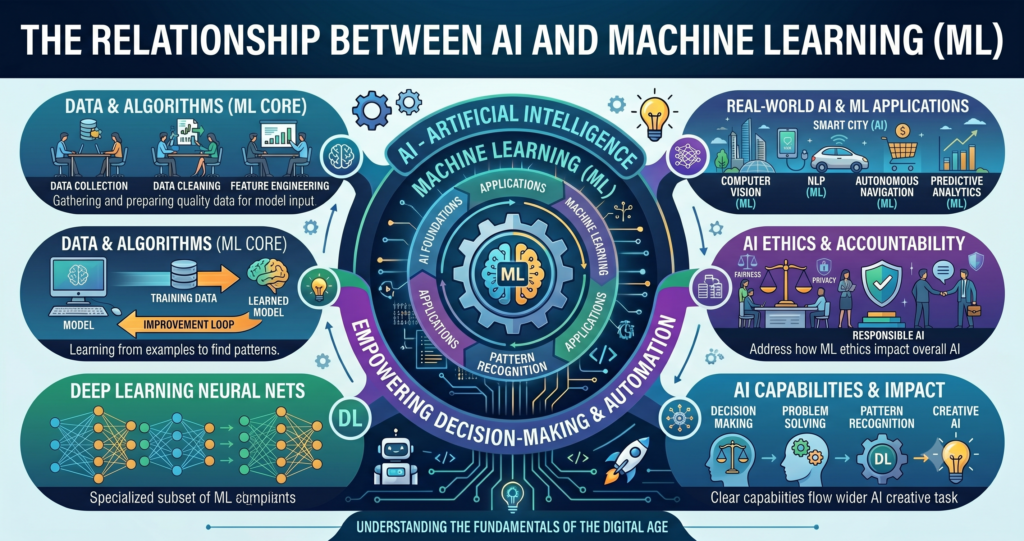
Many people use AI and machine learning interchangeably, but they are not the same.
Artificial Intelligence is the broader concept of creating intelligent machines. Machine Learning is a technique used to achieve AI by allowing systems to learn from data.
Understanding this relationship is fundamental when exploring Essential Artificial Intelligence and Machine Learning because machine learning acts as the engine behind many modern AI applications.
4. Why AI and Machine Learning Matter Today
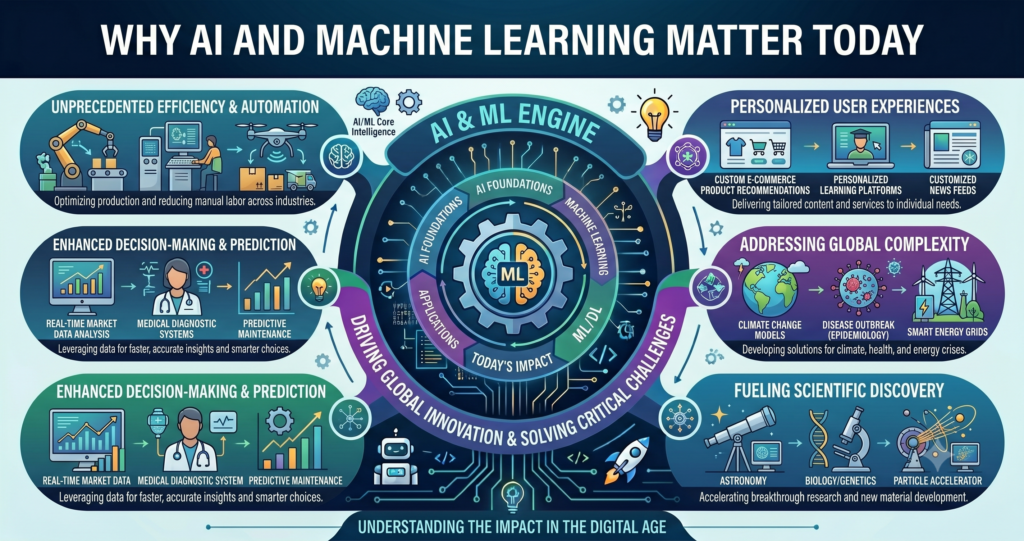
Organizations are generating more data than ever before. Traditional methods cannot efficiently process this information at scale.
Essential Artificial Intelligence and Machine Learning help businesses:
- Analyze large datasets quickly
- Improve operational efficiency
- Reduce costs
- Enhance customer experiences
- Make data-driven decisions
Companies that successfully implement AI solutions often gain a significant competitive advantage in their industries.
5. Key Components of AI Systems
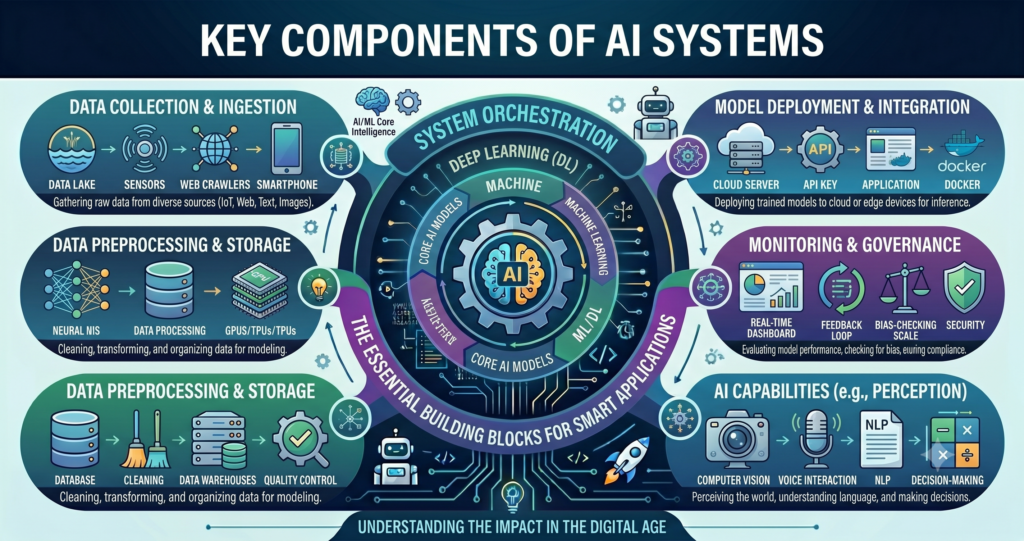
Successful AI implementations typically include several important components:
Data Collection
High-quality data forms the foundation of every AI system.
Algorithms
Algorithms process information and identify patterns.
Computing Power
Modern AI models require substantial computational resources.
Model Training
Systems learn from historical data to improve predictions.
These components work together to create effective Essential Artificial Intelligence and Machine Learning solutions capable of delivering real business value.
6. Real-World Applications Across Industries
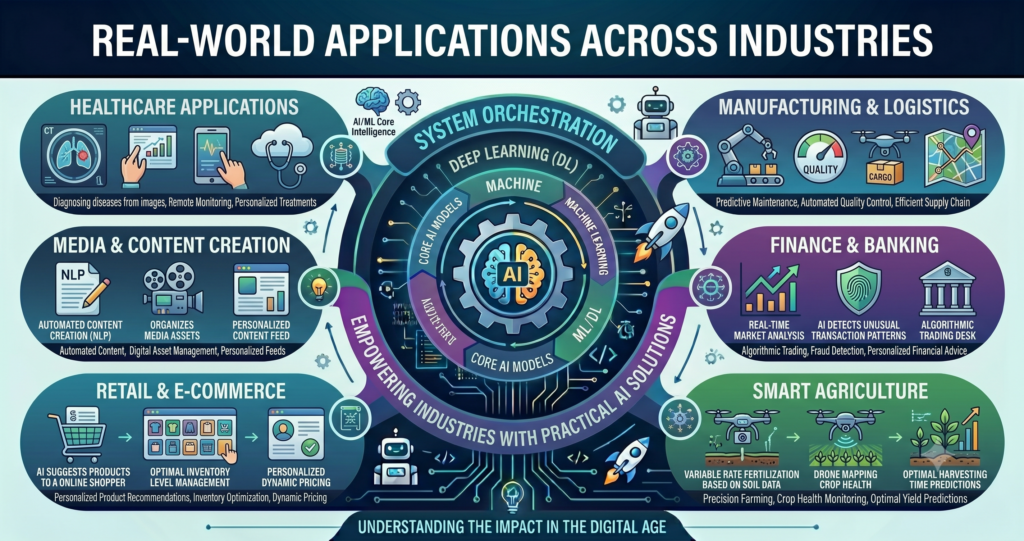
The adoption of Essential Artificial Intelligence and Machine Learning continues to expand across multiple sectors.
Healthcare
AI assists in disease detection, medical imaging, and patient monitoring.
Finance
Banks use machine learning for fraud detection and risk assessment.
Retail
Retailers implement recommendation engines and inventory optimization systems.
Manufacturing
AI-powered predictive maintenance reduces equipment downtime.
Education
Personalized learning platforms improve student outcomes and engagement.
These practical applications demonstrate how AI is transforming everyday operations worldwide.
7. Benefits of Artificial Intelligence and Machine Learning
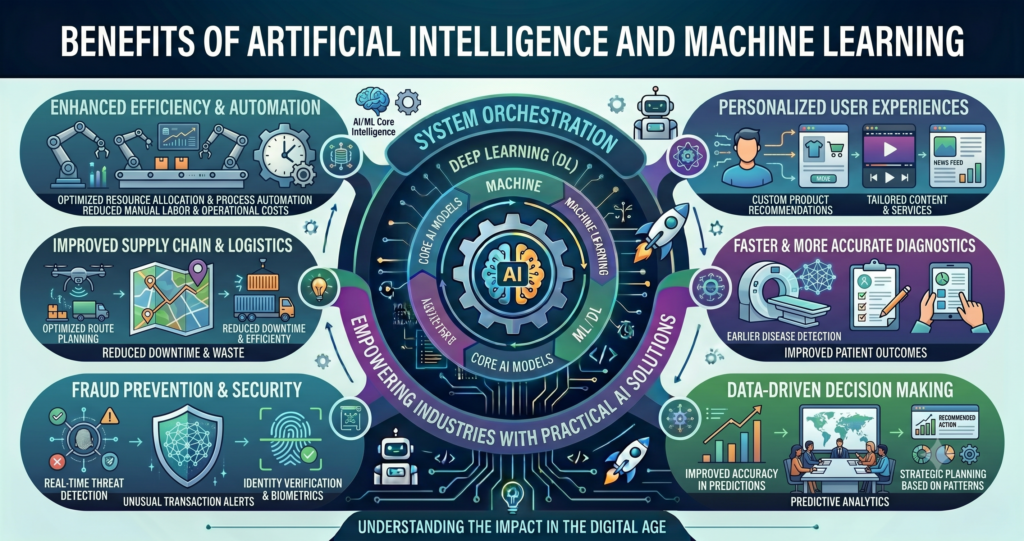
The advantages of Essential Artificial Intelligence and Machine Learning extend beyond automation.
Key benefits include:
- Increased productivity
- Improved accuracy
- Faster decision-making
- Enhanced customer service
- Better forecasting capabilities
- Cost reduction
- Scalable operations
Organizations leveraging AI effectively can unlock new levels of efficiency and innovation.
8. Challenges and Risks of AI Adoption
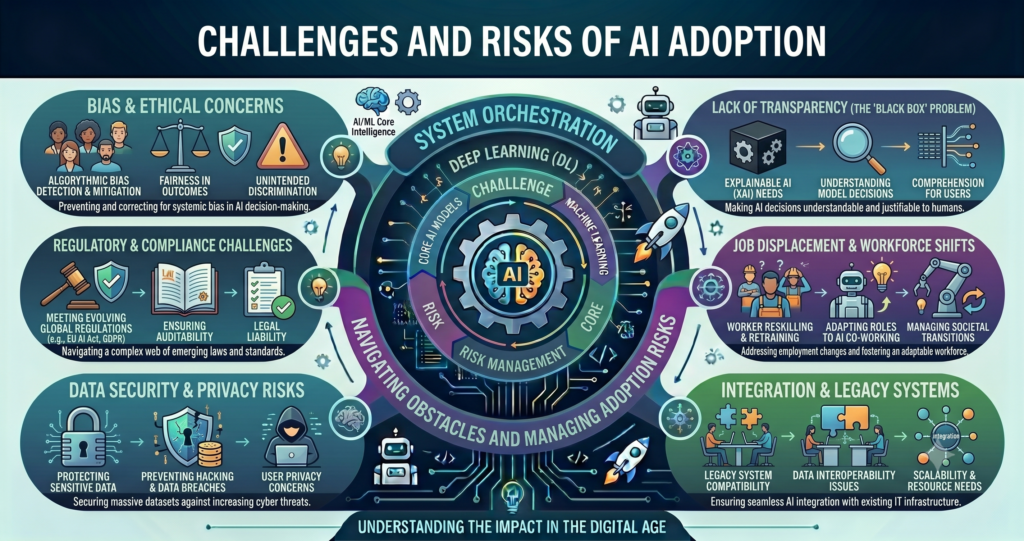
Despite its benefits, AI implementation comes with challenges.
Data Privacy Concerns
Organizations must protect sensitive information.
Bias in Algorithms
Poor-quality training data can produce unfair outcomes.
Security Risks
AI systems may become targets for cyberattacks.
Skills Gap
Many businesses struggle to find qualified AI professionals.
Addressing these challenges is essential for responsible deployment of Essential Artificial Intelligence and Machine Learning technologies.
9. The Role of Data in Machine Learning
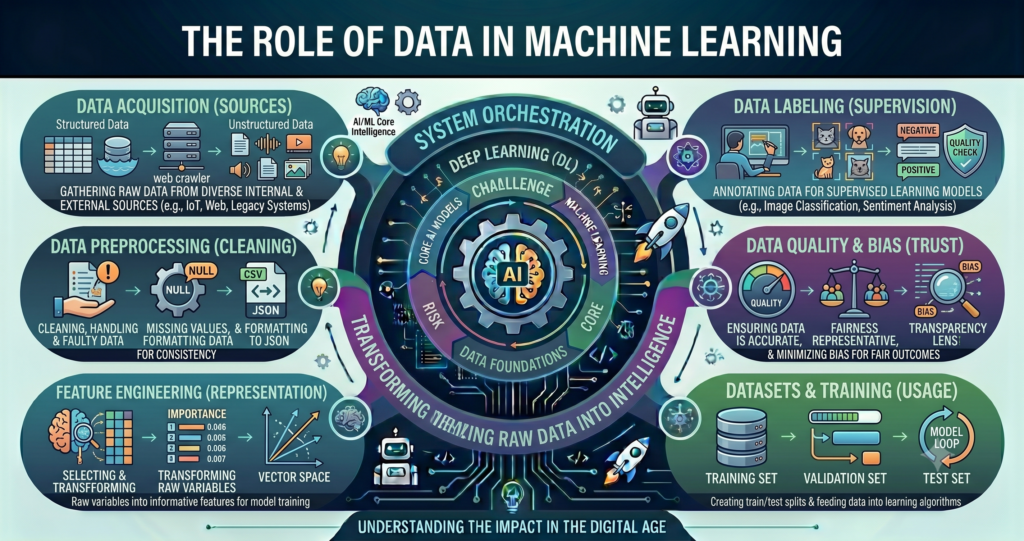
Data serves as the fuel for machine learning systems.
Without quality data, even the most advanced AI models cannot produce reliable results. Organizations investing in Essential Artificial Intelligence and Machine Learning must focus on:
- Data accuracy
- Data consistency
- Data governance
- Data security
- Continuous monitoring
A strong data strategy significantly improves AI performance and business outcomes.
10. Ethical Considerations in AI Development
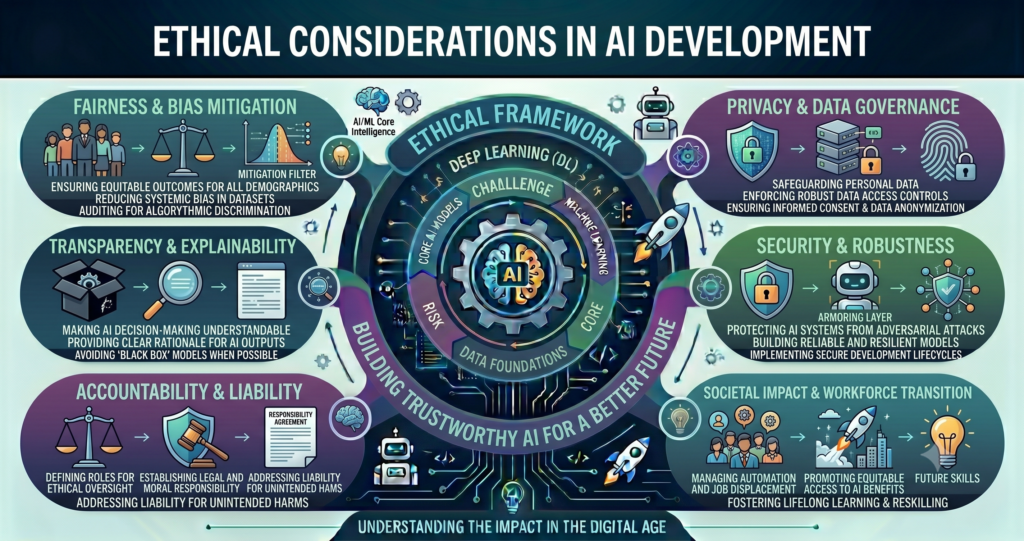
As AI becomes more influential, ethical considerations are increasingly important.
Responsible Essential Artificial Intelligence and Machine Learning practices should emphasize:
- Transparency
- Fairness
- Accountability
- Privacy protection
- Human oversight
Organizations that prioritize ethical AI can build trust while minimizing potential risks associated with automated decision-making.
11. Future Trends in AI and Machine Learning
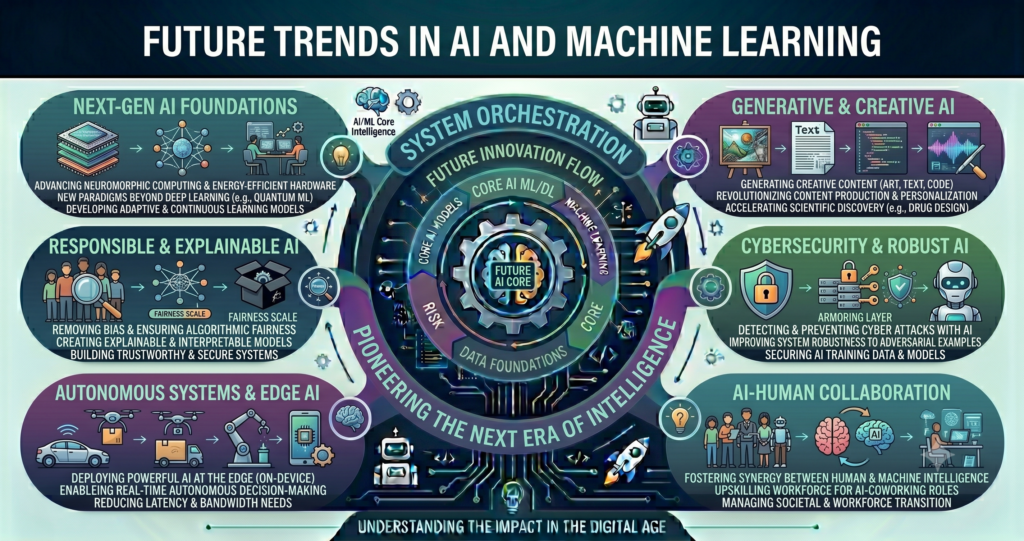
The future of Essential Artificial Intelligence and Machine Learning looks promising.
Emerging trends include:
Generative AI
Systems capable of creating text, images, and videos.
Explainable AI
Tools designed to improve transparency in AI decisions.
Edge AI
AI processing directly on devices rather than cloud servers.
Autonomous Systems
Advanced robotics and self-driving technologies.
These innovations are expected to drive significant economic and technological growth over the next decade.
12. How to Prepare for the AI Revolution
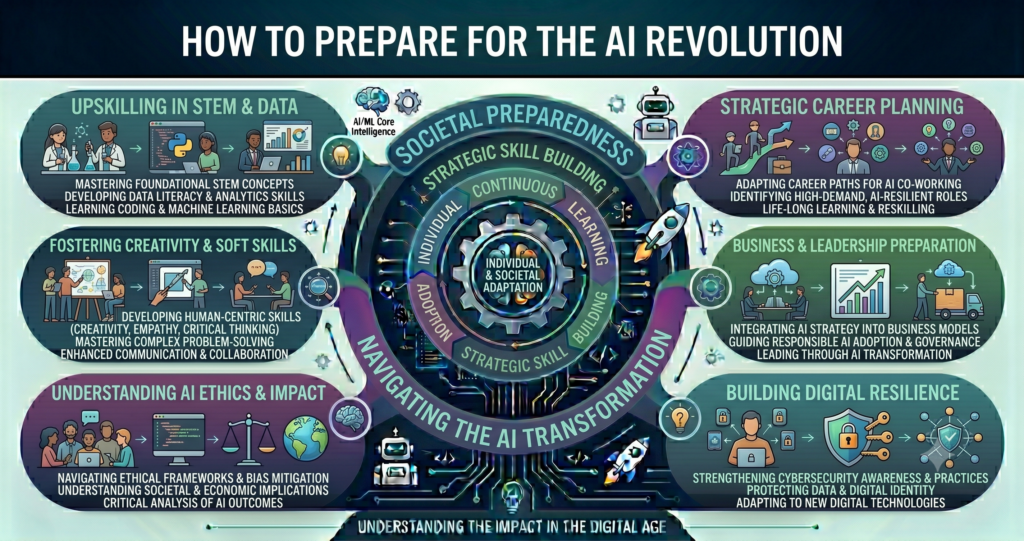
Preparing for the future requires continuous learning and adaptation.
Professionals can benefit by:
- Learning AI fundamentals
- Developing data literacy
- Understanding machine learning concepts
- Exploring AI tools and platforms
- Staying informed about industry developments
Organizations should invest in training programs, infrastructure, and strategic planning to maximize the value of Essential Artificial Intelligence and Machine Learning initiatives.
Conclusion
The rapid advancement of technology is redefining how people work, communicate, and innovate. Essential Artificial Intelligence and Machine Learning are no longer futuristic concepts; they are powerful tools shaping modern society and driving business transformation.
From improving healthcare outcomes and financial services to enhancing customer experiences and operational efficiency, AI and machine learning continue to create unprecedented opportunities. While challenges related to ethics, privacy, and implementation remain, organizations that embrace responsible innovation will be best positioned for long-term success.
By understanding the principles, applications, and future potential of Essential Artificial Intelligence and Machine Learning, businesses and individuals can confidently navigate the AI revolution and thrive in an increasingly intelligent digital world.
Also Read Our other Blogs: Modern Cybersecurity Trends and Strategic Resilience Intelligence: Beyond Security Toward Enterprise Resilience in 2026
