
Introduction
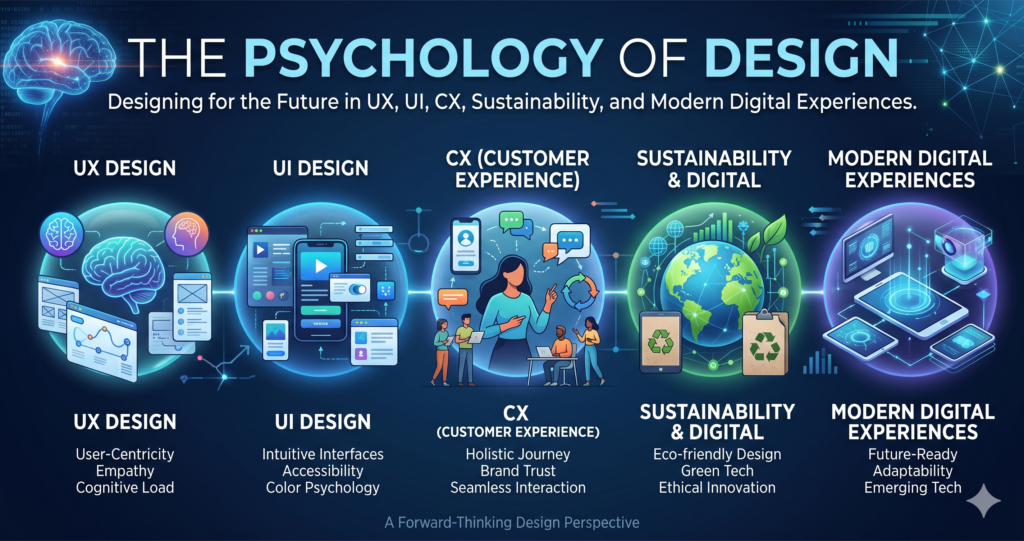
In today’s rapidly evolving digital landscape, design is no longer limited to aesthetics. It has become a strategic tool that influences user behavior, business growth, sustainability initiatives, and technological innovation. Organizations that prioritize Designing for the Future create products and experiences that are intuitive, meaningful, and adaptable to changing user expectations.
From user experience (UX) and user interface (UI) design to customer experience (CX) strategies, modern design is deeply rooted in psychology. Understanding how people think, feel, and interact with digital products allows businesses to develop solutions that resonate with users while maintaining long-term relevance.
At the same time, sustainability and eco-friendly innovation are reshaping how designers approach their work. Consumers increasingly expect brands to embrace ethical practices, reduce environmental impact, and create responsible digital experiences.
This article explores the psychology behind effective design, the importance of sustainability, evolving UX/UI/CX trends, and career opportunities across freelance, in-house, and agency environments—all through the lens of Designing for the Future.
Table of Contents
Do Checkout: https://developer.apple.com/design/human-interface-guidelines/
1. Understanding the Psychology Behind Design
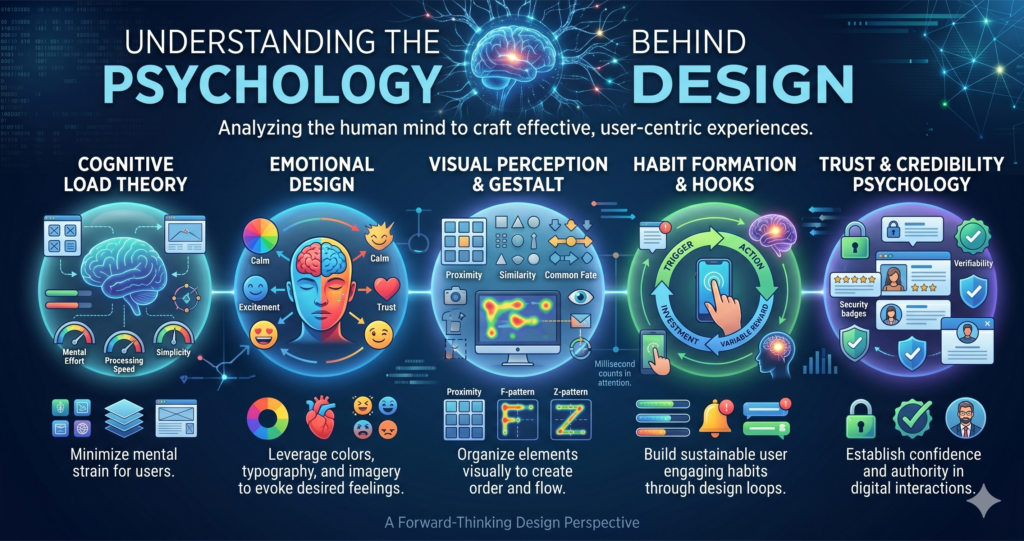
Design psychology focuses on how visual elements, interactions, and experiences influence human behavior. Every button, color, typography choice, and layout decision can impact user perception and decision-making.
When organizations focus on Designing for the Future, they prioritize human-centered experiences that align with cognitive processes and emotional responses.
Key Psychological Principles in Design
Cognitive Load Reduction
Users prefer interfaces that are easy to understand and navigate. Simplified designs reduce mental effort and help users accomplish tasks efficiently.
Benefits include:
- Faster decision-making
- Improved user satisfaction
- Lower abandonment rates
- Higher conversion rates
Visual Hierarchy
Visual hierarchy guides users toward important information through:
- Typography
- Color contrast
- Spacing
- Size variations
A strong hierarchy supports Designing for the Future by creating intuitive experiences that remain effective across devices and platforms.
Emotional Design
People often make decisions emotionally before justifying them logically.
Design elements that create emotional connections include:
- Storytelling
- Personalized experiences
- Engaging visuals
- Micro-interactions
Brands that understand emotional design build stronger customer loyalty and trust.
2. Why Designing for the Future Matters
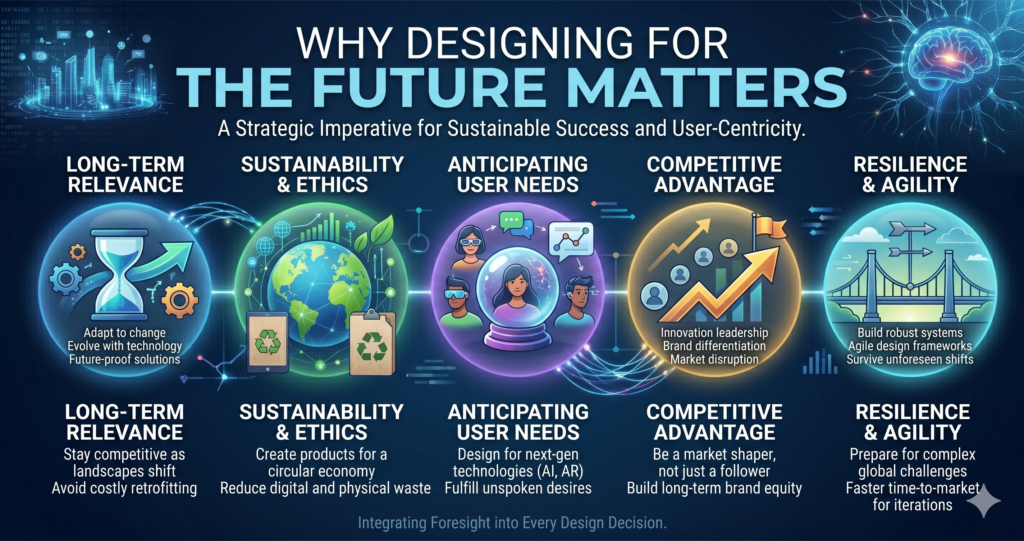
Technology evolves quickly, but user expectations evolve even faster. Businesses must create experiences that remain relevant despite technological shifts.
Designing for the Future involves anticipating upcoming trends while maintaining usability and accessibility.
Key goals include:
- Long-term adaptability
- Scalability
- Sustainability
- Accessibility
- User-centric innovation
Organizations that embrace future-focused design can respond more effectively to changing markets and customer needs.
3. The Evolution of UX Design
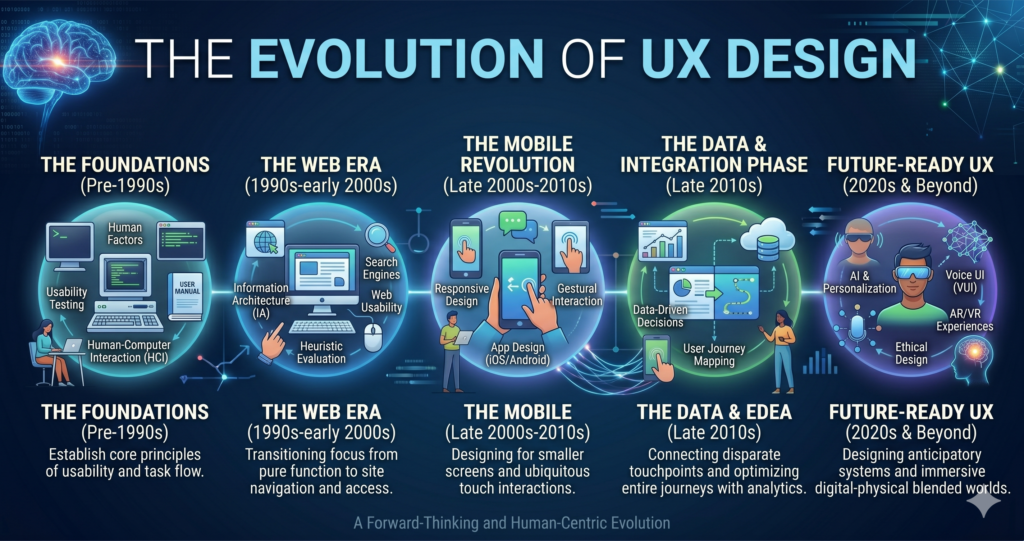
User Experience (UX) design focuses on how users interact with products and services. It encompasses research, testing, usability, and overall satisfaction.
As digital ecosystems become more complex, Designing for the Future requires UX professionals to think beyond current requirements.
Emerging UX Trends
AI-Powered Personalization
Artificial intelligence enables:
- Personalized recommendations
- Adaptive interfaces
- Predictive experiences
- Smart automation
These capabilities improve engagement while reducing friction.
Voice User Interfaces
Voice assistants and conversational interfaces continue to grow in popularity.
Future UX strategies will increasingly incorporate:
- Natural language interactions
- Voice search optimization
- Hands-free experiences
Inclusive Design
Accessibility is becoming a fundamental requirement rather than an optional feature.
Inclusive UX considers:
- Visual impairments
- Hearing limitations
- Cognitive differences
- Motor disabilities
By embracing inclusivity, organizations strengthen their commitment to Designing for the Future.
4. The Future of UI Design
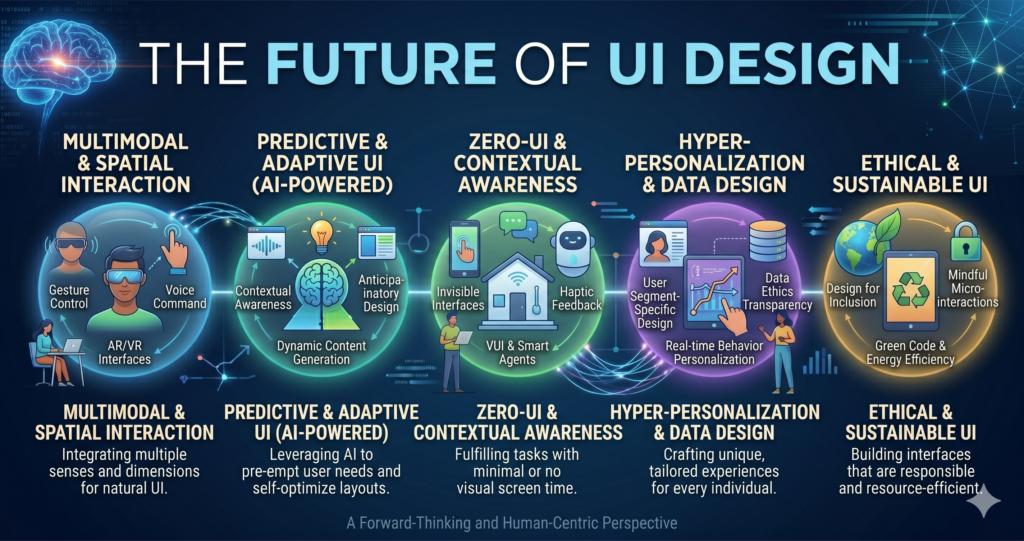
User Interface (UI) design transforms functionality into visually appealing and interactive experiences.
Modern UI design emphasizes simplicity, clarity, and engagement.
Key UI Trends Shaping the Future
Minimalist Interfaces
Users increasingly prefer clean, uncluttered experiences.
Characteristics include:
- Generous whitespace
- Clear typography
- Simple navigation
- Focused content
Motion Design
Animations help users understand interactions and transitions.
Benefits include:
- Better usability
- Improved engagement
- Enhanced feedback mechanisms
Cross-Platform Consistency
Consumers move seamlessly between devices.
Future-ready UI design ensures consistency across:
- Smartphones
- Tablets
- Laptops
- Smart TVs
- Wearable devices
Cross-platform consistency remains a core aspect of Designing for the Future.
5. Customer Experience (CX): Beyond UX and UI
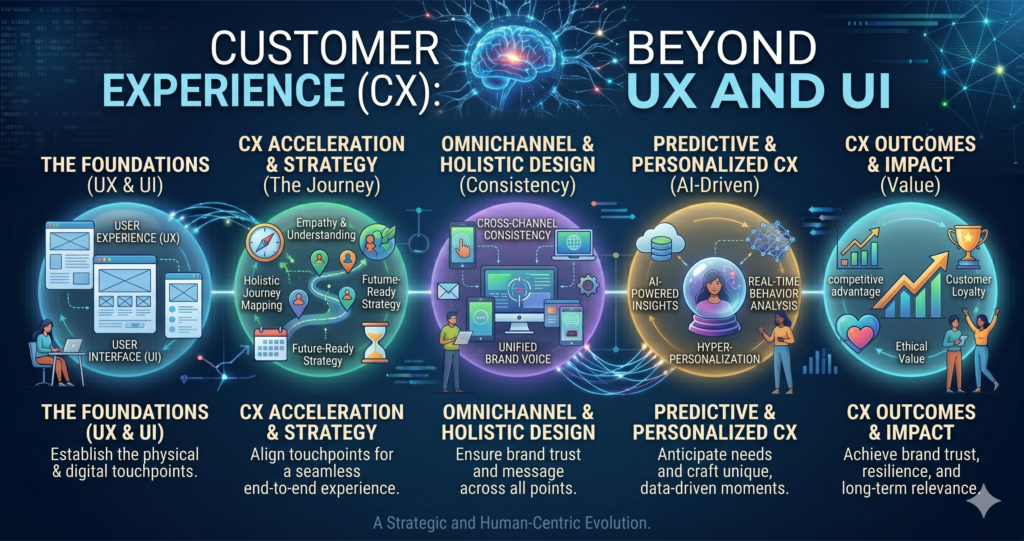
Customer Experience (CX) encompasses every interaction a customer has with a brand.
While UX and UI focus on digital products, CX covers the entire customer journey.
This includes:
- Marketing
- Sales
- Customer support
- Product usage
- Post-purchase engagement
Building Better Customer Experiences
Organizations should focus on:
Personalization
Customers expect tailored experiences.
Examples include:
- Customized content
- Product recommendations
- Personalized communication
Omnichannel Integration
Users interact through multiple channels.
Consistency across:
- Websites
- Mobile apps
- Social media
- Physical locations
supports effective Designing for the Future strategies.
Customer Feedback Loops
Continuous improvement requires ongoing feedback.
Methods include:
- Surveys
- Reviews
- User testing
- Analytics
6. Sustainability and Eco-Friendly Innovation in Design
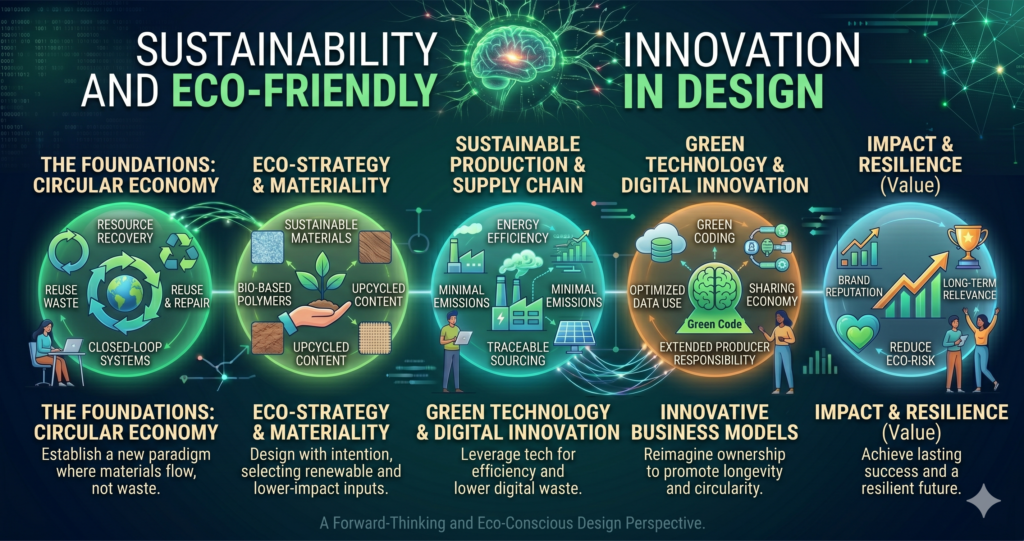
Sustainability has become a major priority across industries. Modern consumers increasingly support brands that demonstrate environmental responsibility.
As a result, Designing for the Future must incorporate sustainable practices.
What Is Sustainable Design?
Sustainable design focuses on reducing environmental impact while maximizing efficiency and user value.
Key objectives include:
- Resource conservation
- Energy efficiency
- Waste reduction
- Long-term usability
Sustainable Digital Design Strategies
Optimized Website Performance
Faster websites consume fewer server resources.
Optimization techniques include:
- Image compression
- Efficient coding
- Reduced page weight
- Performance-focused development
Longer Product Lifecycles
Designers should create products that remain useful for extended periods.
Benefits include:
- Reduced waste
- Lower development costs
- Better customer satisfaction
Ethical Technology Design
Responsible innovation involves:
- Transparent data practices
- Privacy protection
- Ethical AI implementation
Organizations committed to Designing for the Future increasingly view sustainability as a competitive advantage.
7. Emerging Technologies Influencing Future Design
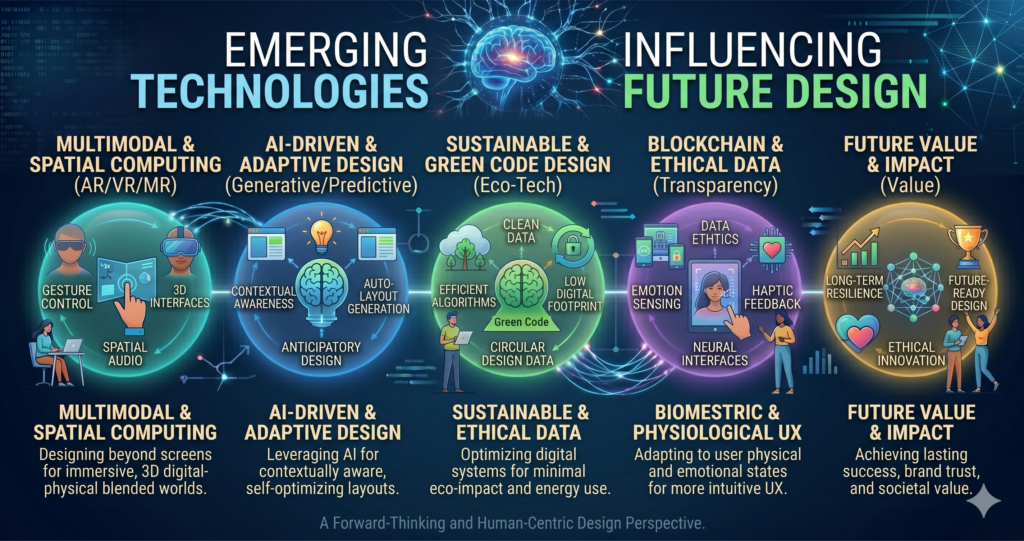
Technology continues to reshape design methodologies and user expectations.
Several innovations are driving the next generation of digital experiences.
Artificial Intelligence
AI assists designers through:
- Automated design suggestions
- Content generation
- Predictive analytics
- Personalization engines
Augmented Reality (AR)
AR bridges digital and physical environments.
Applications include:
- Retail visualization
- Education
- Healthcare
- Product demonstrations
Virtual Reality (VR)
VR creates immersive experiences that transform:
- Training programs
- Entertainment
- Remote collaboration
- Digital commerce
Extended Reality (XR)
XR combines AR, VR, and mixed reality experiences.
Designers embracing these technologies are actively Designing for the Future by creating immersive user experiences.
8. Freelance, In-House, or Agency: Choosing the Right Design Career Path
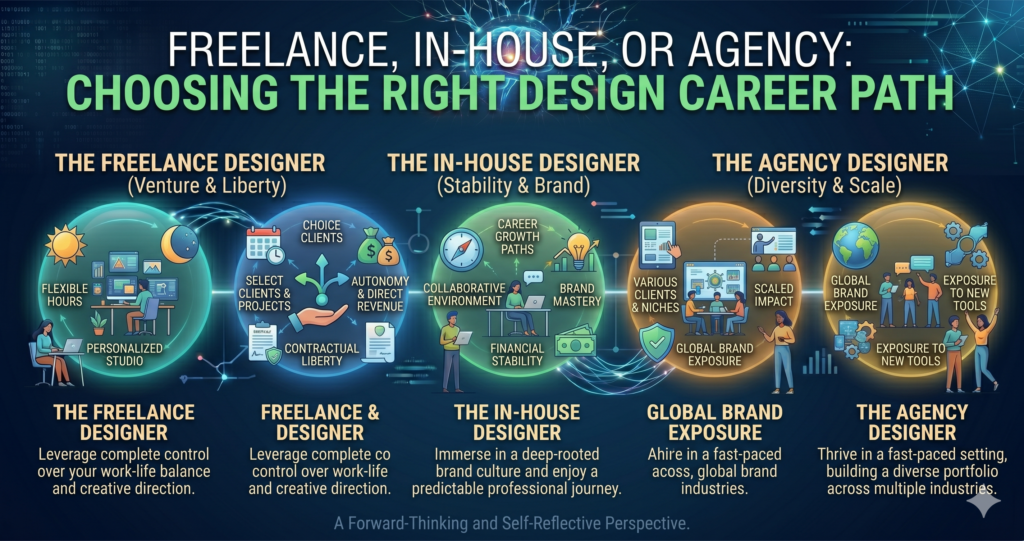
The design industry offers multiple career options. Understanding the strengths of each path can help professionals make informed decisions.
Freelance Design Careers
Freelancers operate independently and work with multiple clients.
Advantages
- Flexible schedules
- Diverse projects
- Higher earning potential
- Location independence
Challenges
- Inconsistent income
- Client acquisition responsibilities
- Administrative workload
Freelancers who focus on Designing for the Future can differentiate themselves through specialized expertise in emerging technologies and sustainability.
9. In-House Design Teams
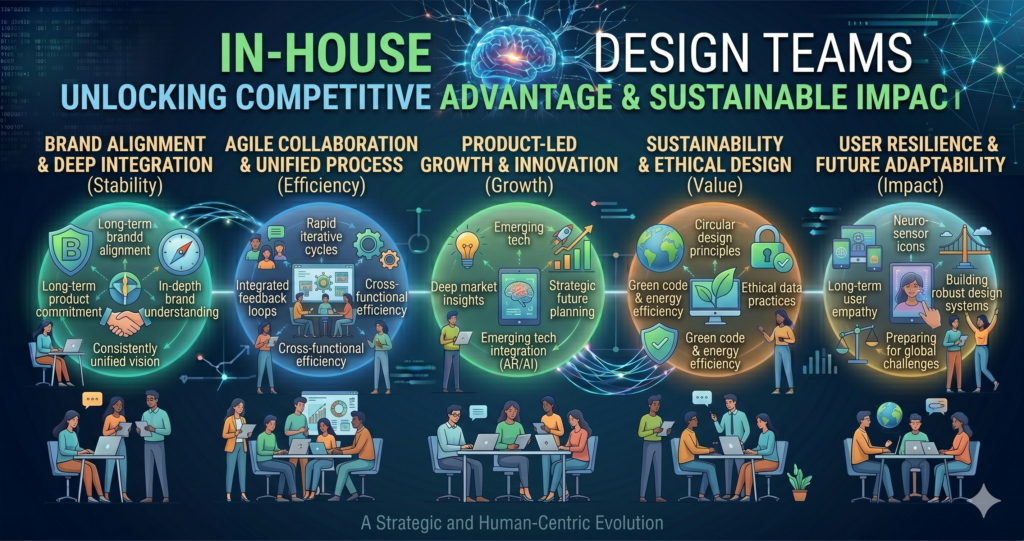
In-house designers work exclusively for one organization.
Advantages
- Stable income
- Long-term projects
- Deep brand understanding
- Career growth opportunities
Challenges
- Limited project variety
- Organizational constraints
In-house teams often play a critical role in implementing Designing for the Future initiatives across products and customer experiences.
10. Agency Design Careers
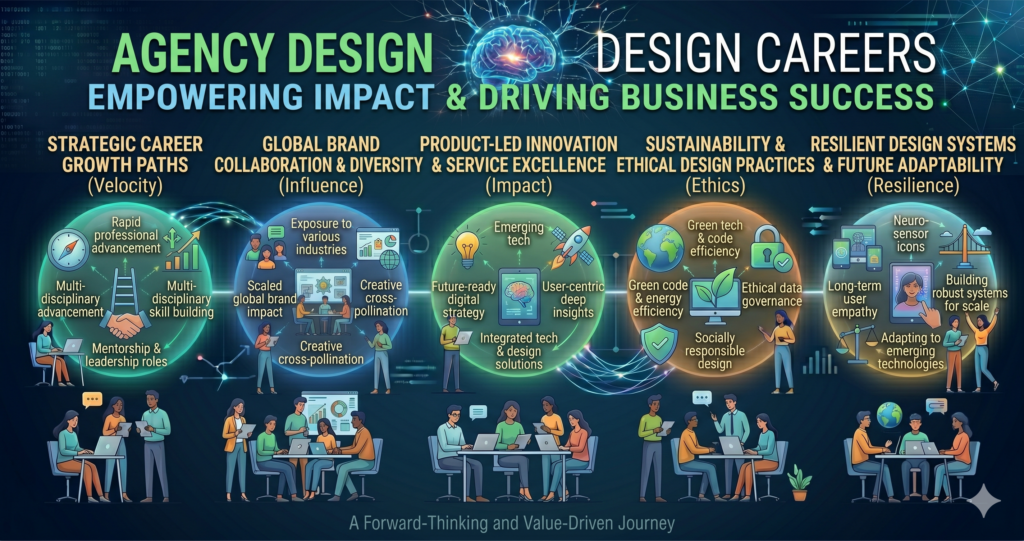
Agencies serve multiple clients across various industries.
Advantages
- Diverse project exposure
- Fast-paced learning
- Collaboration opportunities
- Strong portfolio development
Challenges
- Tight deadlines
- High workloads
- Frequent context switching
Agencies frequently lead innovation efforts and help clients embrace Designing for the Future through advanced design strategies.
11. Essential Skills for Future Designers
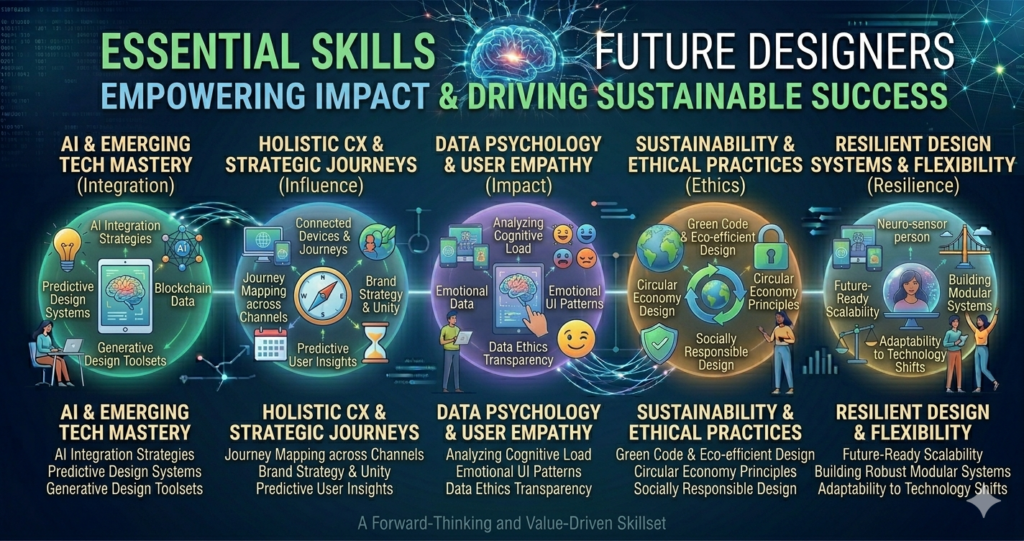
To remain competitive, designers must continuously develop new skills.
1. UX Research
Understanding user behavior through:
- Interviews
- Surveys
- Analytics
- Usability testing
2. Data-Driven Design
Successful design decisions increasingly rely on measurable insights.
3. Sustainability Awareness
Eco-conscious design principles are becoming industry standards.
4. AI Collaboration
Designers must learn how to leverage AI tools effectively.
5. Strategic Thinking
Future-focused professionals connect design decisions to business goals.
These competencies support successful Designing for the Future practices across industries.
12. Best Practices for Designing for the Future
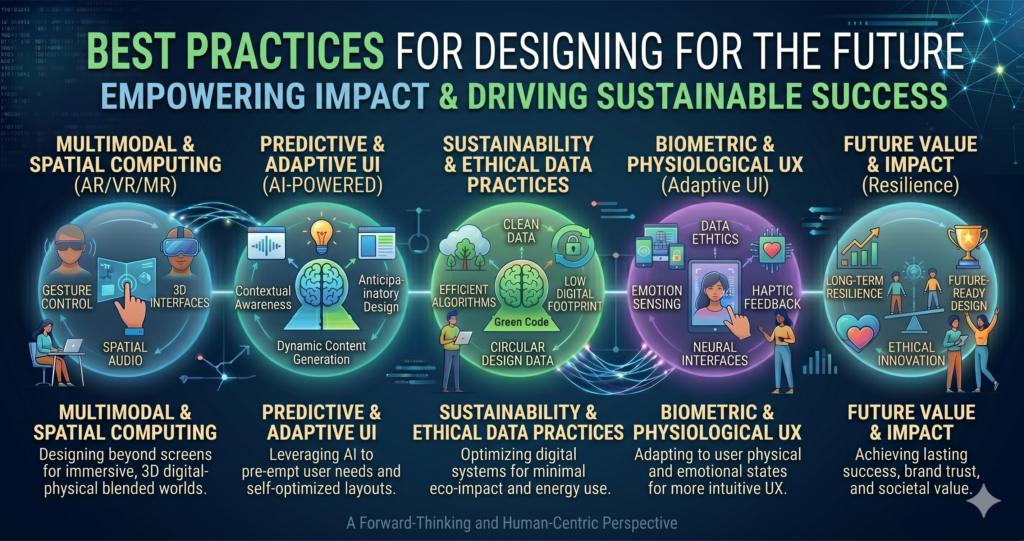
Organizations seeking long-term success should adopt several key principles.
Prioritize Accessibility
Design products that everyone can use regardless of ability.
Embrace Continuous Testing
Regular testing helps identify usability issues before they impact customers.
Focus on Scalability
Build systems capable of adapting to growth and technological change.
Invest in Sustainability
Environmental responsibility is increasingly important to customers and stakeholders.
Leverage Emerging Technologies
Evaluate how AI, AR, VR, and automation can enhance user experiences.
These strategies strengthen an organization’s ability to succeed through Designing for the Future.
13. The Future of Design Is Human-Centered
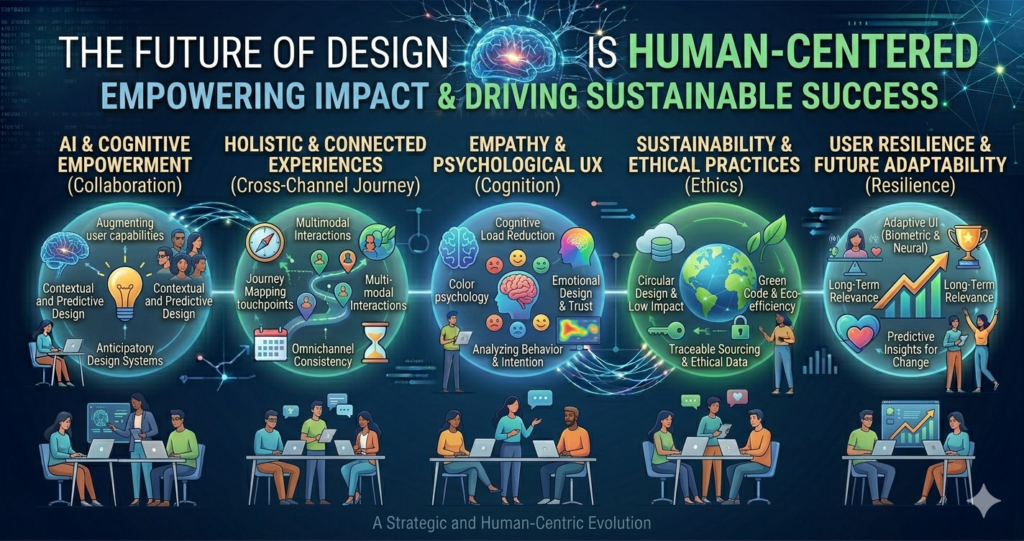
While technology continues to evolve, human needs remain at the center of successful design.
Future design leaders will combine:
- Psychology
- Technology
- Sustainability
- Creativity
- Business strategy
Organizations that prioritize these elements can create meaningful experiences that drive engagement, loyalty, and long-term growth.
The most successful brands will not simply react to change—they will actively shape it through thoughtful innovation and strategic Designing for the Future.
Conclusion
The intersection of psychology, UX, UI, CX, sustainability, and emerging technology is transforming the design industry. Businesses that invest in Designing for the Future are better equipped to meet evolving customer expectations, embrace innovation, and build resilient digital ecosystems.
Whether working as a freelancer, in-house designer, or agency professional, understanding human behavior and future trends is essential for success. By combining user-centered thinking with sustainable innovation and technological advancement, designers can create experiences that remain valuable for years to come.
In a world defined by constant change, Designing for the Future is no longer an option it is a necessity for organizations and professionals seeking sustainable growth and lasting impact.
Also Read Our other Blogs: AI vs Gen AI vs ML: Essentials, Architecture, Models, and Applications
